


Wondle™ Astralux 70mm Starter Telescope
Wondle™ Astralux 70mm Starter Telescope
Gets them curious about what's up there
Replaces an hour of screen time nightly
Makes space real instead of another video
Couldn't load pickup availability
30-day risk
free trial
Express 48hr
dispatch


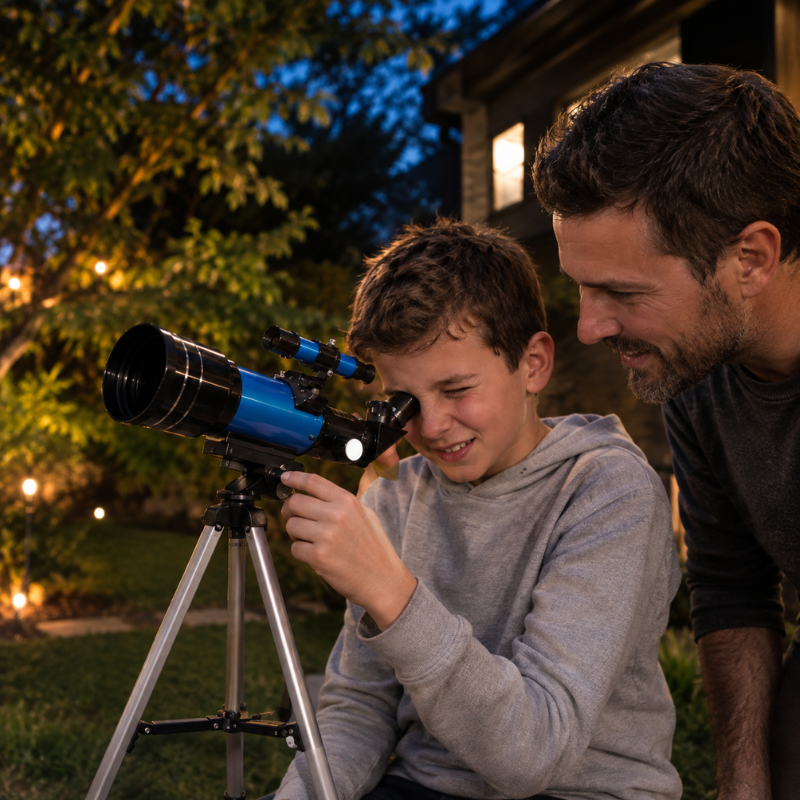
When was the last time your kid was properly amazed by something?
Not amused, not entertained for four minutes, actually amazed. Most of what's put in front of them now is designed to hold attention for as long as possible and then hand them straight to the next thing. So the bar keeps rising, the novelty keeps getting shorter, and nothing sticks. And you end up buying yet another present that's forgotten by the second week of the holidays.
The problem was never that kids aren't curious. It's that almost nothing they're handed is genuinely worth being curious about. That's exactly why we created the Wondle™ Astralux 70mm Starter Telescope. A 70mm aperture pulls in enough light to show craters and mountain shadows on the Moon, which is the moment most people never forget.
🌙 Shows real detail - shows craters and mountain shadows on the moon tonight
📱 Beats the screen - gives them something more interesting than the phone
📸 Captures the moment - lets them photograph the moon and show everyone
🌌 Gets you outside - turns a clear night into something you do together
Get the Wondle™ Astralux 70mm Starter Telescope today for 50% off and give them a night they'll actually remember. Every order is backed by our 30-day money-back guarantee so there's nothing to lose!
You'll love this Astralux 70mm Starter Telescope because...

Shows Real Detail
Shows craters and mountain shadows on the moon tonight

Beats The Screen
Gives them something more interesting than the phone

Captures The Moment
Lets them photograph the moon and show everyone

30-Day Guarantee
If it doesn't spark anything, get your money back
Have questions?
What is the Wondle™ Astralux 70mm Starter Telescope?
It's a refractor telescope built for beginners, with a 70mm aperture and a 300mm focal length on a full-height aluminium tripod. It's made to be the first real telescope a kid uses, not a toy one.
What comes in the box?
Telescope tube, aluminium tripod, 90° erect-image diagonal, 20mm and 6mm eyepieces, a 3x Barlow lens, a 1.5x erecting eyepiece, a 5x24 finderscope with mounting bracket, a smartphone adapter, a star target planisphere, the aiming and lock handle, and the user manual.
What will they actually be able to see?
The Moon is the showstopper, with craters and mountain shadows in real detail. On a clear night they'll also pick up Jupiter with its four bright moons lined up beside it, Saturn's rings as a distinct shape, and bright star clusters. It won't show the colourful galaxy images you see online, since those come from long-exposure photography rather than the eye.
How does the 15x to 150x magnification work?
The 20mm eyepiece gives 15x and the 6mm gives 50x. Adding the 3x Barlow lens takes those to 45x and 150x. Most of the best viewing happens at the lower powers, with the very highest reserved for the Moon on a still, clear night.
What's the finderscope for?
The 5x24 finderscope sits on top and shows a wide, low-power view, which makes pointing the telescope at something far easier than squinting through the eyepiece. The erect-image diagonal keeps the view the right way up, so it also works for looking at things on the ground.
Is it hard to set up?
No tools needed. The tripod and tube go together in a few minutes, and the aiming and lock handle lets you hold a position once you've found something.
Can they take photos through it?
Yes. The included smartphone adapter clamps a phone over the eyepiece, which works well for the Moon and is how most first photos get taken.
Is it safe to look at the sun?
No. Never point this or any telescope at the sun, with or without an eyepiece in, as it can cause permanent eye damage in an instant. It's built for the night sky only, and daytime use should be limited to landscapes well away from the sun.